2026
Oil on Canvas
48 x 36″
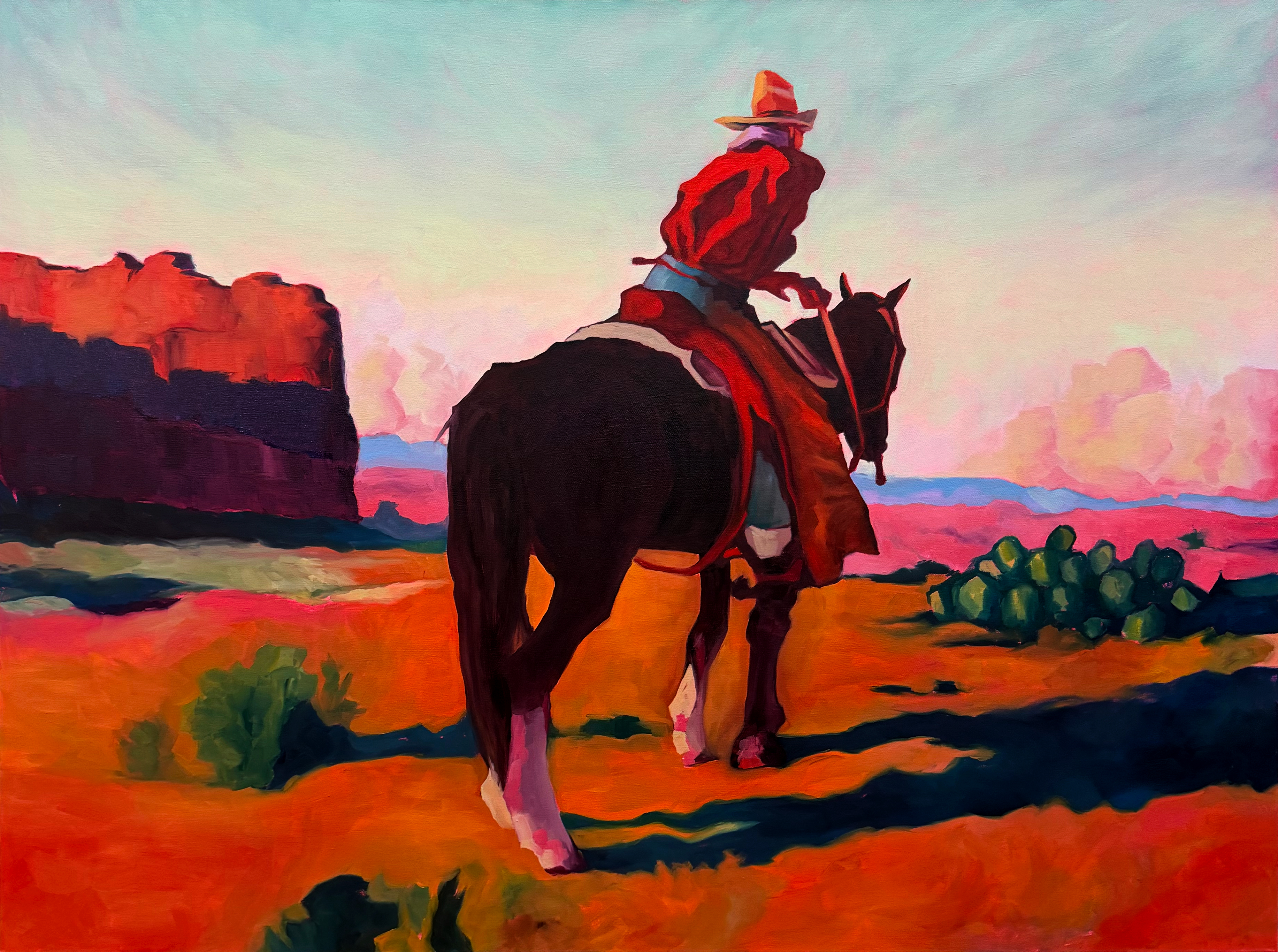
Freedom Fiction challenges the romanticized portrayal of the cowboy as a symbol of independence, heroism, and limitless freedom. Popular culture portrays the cowboy as a solitary figure journeying across an open and empty wilderness in pursuit of adventure and self-discovery. However, the reality of cowboy labor was far less romantic. Before the expansion of railroads across the United Sates, cowboys were primarily hired to herd cattle north toward rail-connected slaughterhouses as a means of survival and financial stability. Beneath the mythology of rugged freedom existed physically demanding labor drivel not by heroism, but economic necessity.
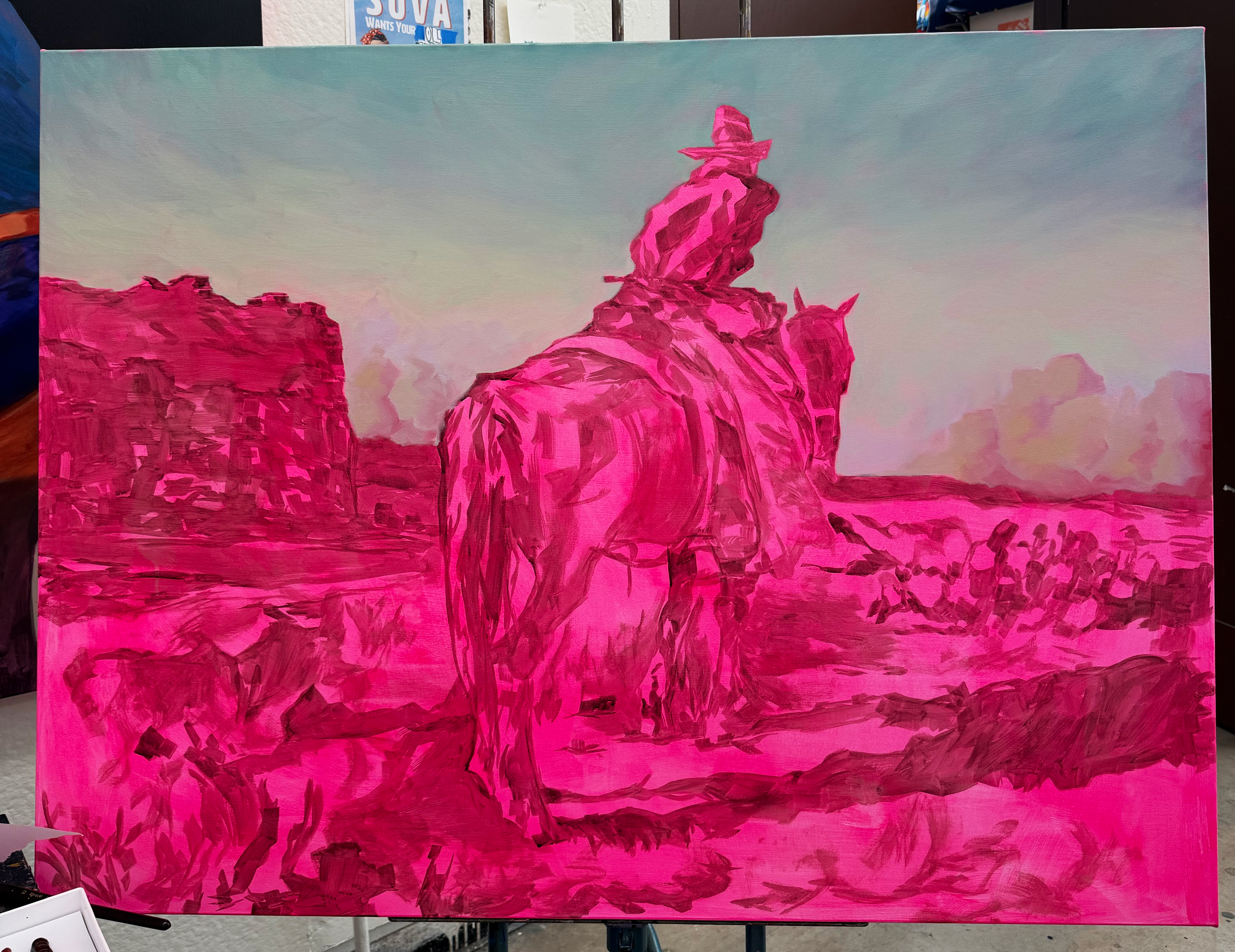
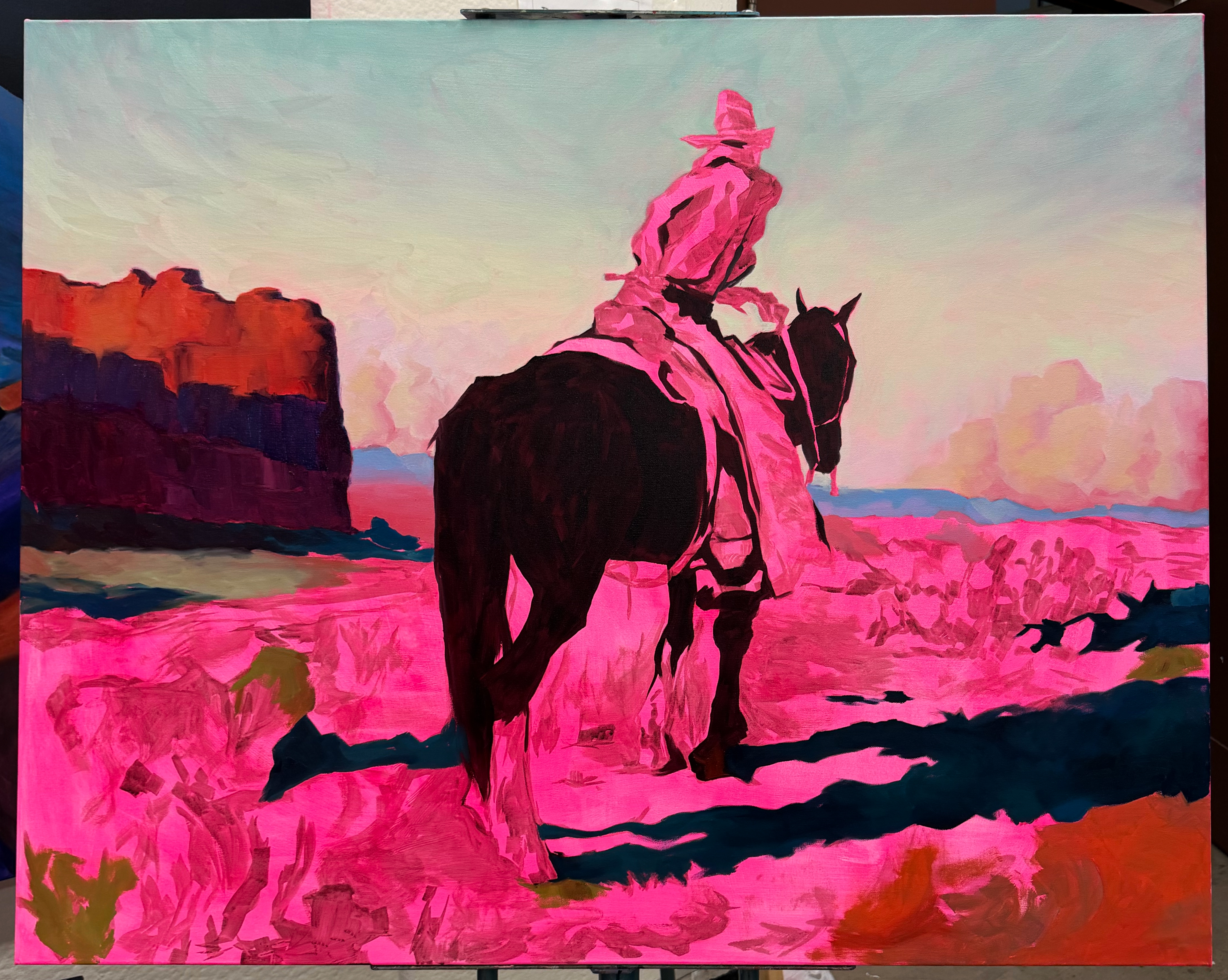
Depicted in the painting is a faceless figure leaning toward to observe a bright and expansive landscape. At first glance, the scene may appear cinematic and full of opportunity, evoking the familiar fantasy of the frontier as a space of freedom and reinvention. However, the landscape instead represents the labor that lies ahead. The anonymity of the figure intentionally removes individuality and legend, reducing the cowboy from mythical hero to worker. The painting rejects the glorified stereotype of the cowboy and instead reframes him as a laborer shaped by survival, capitalism, and historical mythmaking.
At the same time, Freedom Fiction acknowledges a personal fascination with these romanticized narratives of the American West. Like much of contemporary culture, the work exists within the contradiction of being emotionally drawn to the visual language of Western mythology while simultaneously recognizing its distortions. The painting does not attempt to position itself outside of this problem, but instead uses self-awareness to expose how easily spectacle, nostalgia, and consumer culture reshape labor into fantasy. By confronting the seductive imagery often associated with the frontier, Freedom Fiction invites viewers to question not only the myths surrounding the cowboy, but also their own attraction to them.
Process